Dive Brief:
- Torrid on Thursday reported progress in its turnaround despite steep declines in most metrics: Q4 net sales plummeted more than 14% year over year to $236.2 million and comps fell 10%.
- Gross margin contracted to 30% from 33.6% last year, and net loss topped $8 million, widening from $3 million last year.
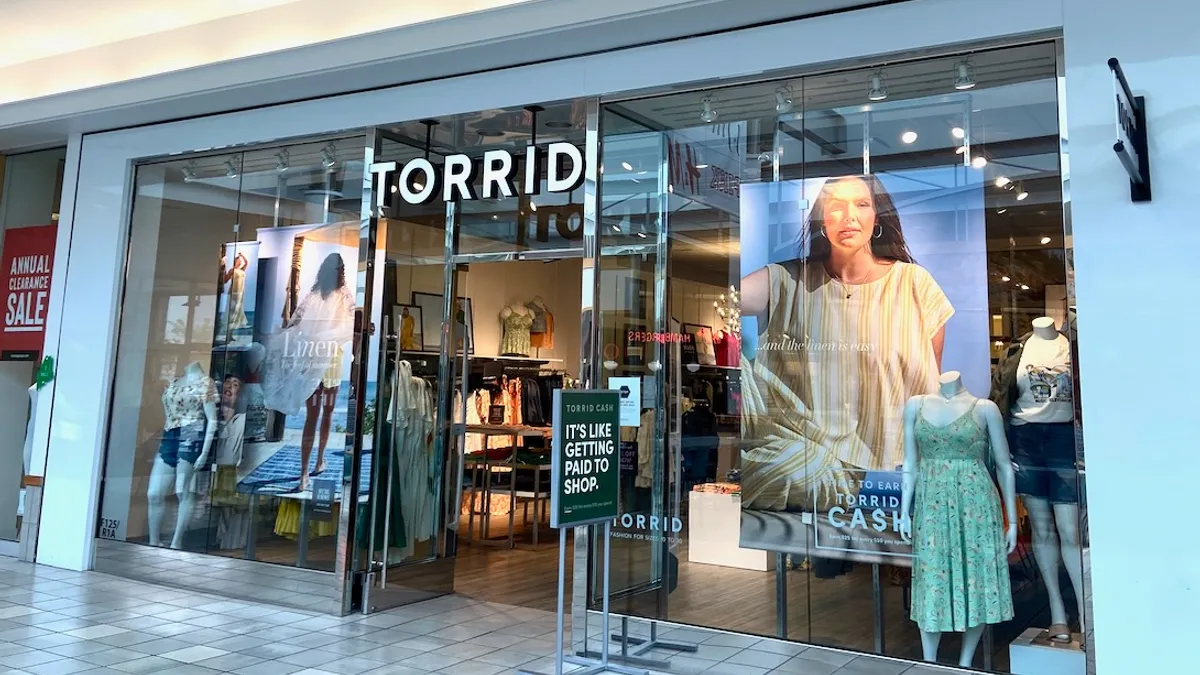
- The women’s plus-apparel retailer closed 151 stores last year — completing 85% of its plan to shutter up to 180 — ending 2025 with 483 locations. In Q1, 11 more stores were closed.
Dive Insight:
Torrid’s holiday quarter beat expectations despite the dire results, and the plus-size apparel specialist has started off the year with a list of accomplishments. Stores that remain open are picking up a meaningful level of sales from those that have shuttered. And the retailer managed some $50 million in gross tariff headwinds while maintaining inventory discipline, CFO Paula Dempsey told analysts Thursday.
“The headline result is this: We entered 2026 with a fundamentally stronger operating structure,” she said.
Torrid has introduced new tactics to bring back customers who have drifted away and appeal to new shoppers. Above all, nearly a third of its assortment is now priced lower, with an aim to grow that to about 40%.
“We've heard time and time again from lapsed customers that one of the primary reasons for spending less is economic pressure on price, which we have addressed through opening price point,” Chief Strategy and Planning Officer Ashlee Wheeler said.
The retailer is also seeing some success with its five higher-margin sub-brands and is bringing back footwear, the latter an initiative that was forced to pause after new U.S. tariffs were imposed last year. The sub-brands drove over $70 million in sales last year, and Torrid expects about 60% growth in 2026 to about $110 million, growing from about 7% of total net sales to 12% in 2026, executives said.
But the retailer’s initiatives, especially the new brands, carry some risk, according to William Blair analysts led by Dylan Carden.
“While we are encouraged by the initial 2026 outlook, a limited track record on new product and worsening fundamentals keep us more cautious, noting a handful of false starts over the last two years,” they said in a Friday research note. “We believe the company remains early in the process of working through structural changes to its model, which likely implies continued volatility as it reinvests savings from store closures into growth initiatives and continues to adjust pricing and merchandising architecture. The most significant risk remains a potential backsliding should newer product fail to resonate.”