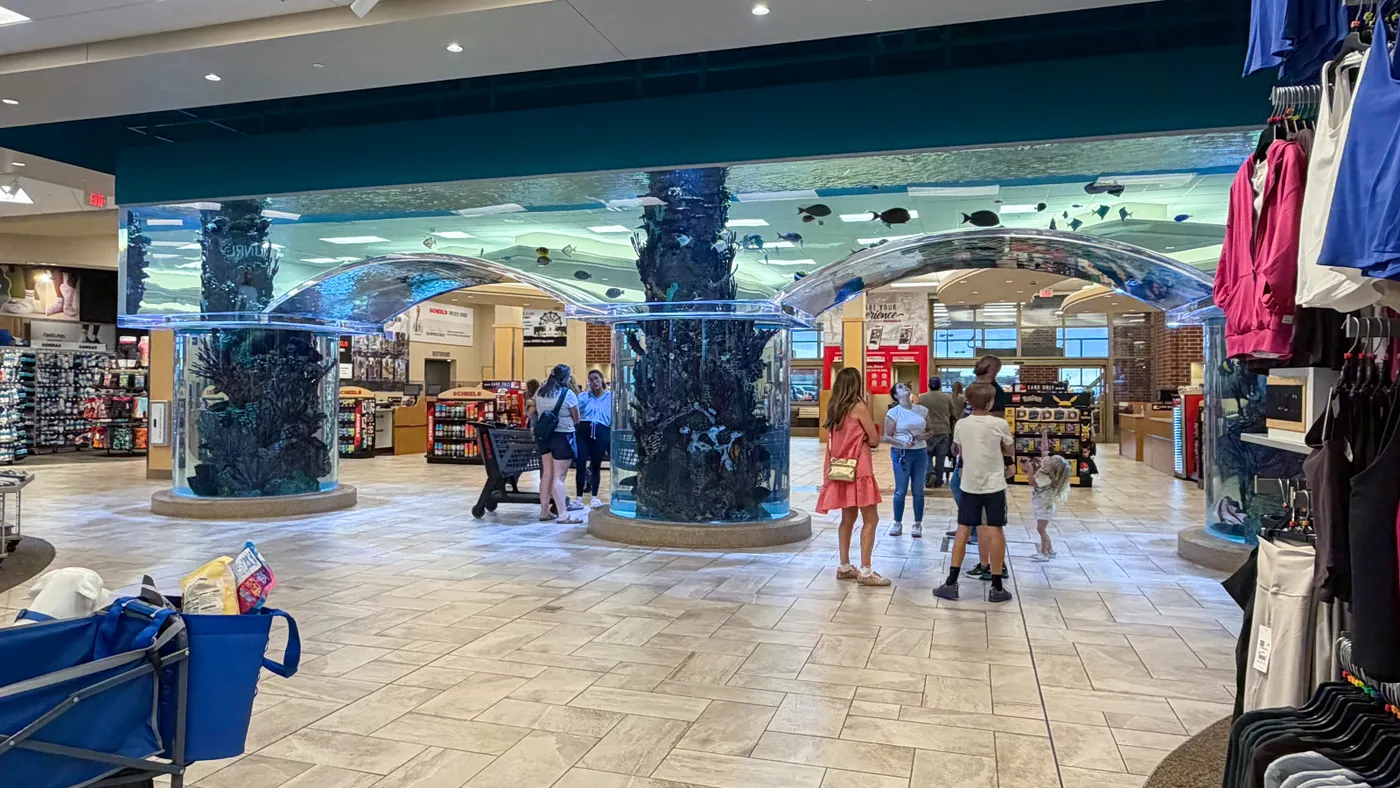
We open on a fully stocked aquarium. A 65-foot tall ferris wheel spins slowly in the distance. Upstairs is a toy shop, a few bowling lanes and an arcade.
It would be logical to assume I’m describing some kind of carnival or entertainment complex. In a way, I am.
But it’s an entertainment complex hidden within the sporting goods wrapper of Scheels.
Scheels was founded in 1902 as a general merchandise store, which evolved into a series of hardware locations. Eventually, in 1972, it started selling athletic gear. These days, the company refers to itself as a sporting goods retailer, but that terminology undersells both the breadth of Scheels’ assortment and the in-store experience.
“The best kept secret in retail is Scheels,” Matt Powell, senior adviser with BCE Consulting, told Retail Dive.
That extends, apparently, to Scheels’ media relations strategy. When I tried to interview the company for this story I was told, “As a privately held, employee-owned company, we generally keep company information and business details private and don’t participate in many media interviews.”
Still, there’s much to be gleaned from a simple visit to a Scheels store. Here’s what I gathered about what the company is doing right — and what it means for the rest of retail.
The power of entertainment
With a relatively small footprint — a new store opening in Littleton, Colorado, in 2029 will be its 38th — Scheels has been able to fly somewhat under the radar, according to Powell. But brands are catching on.
“When we say ‘OK, who's hot?’ Scheels is one of the first names that comes up,” Powell said.
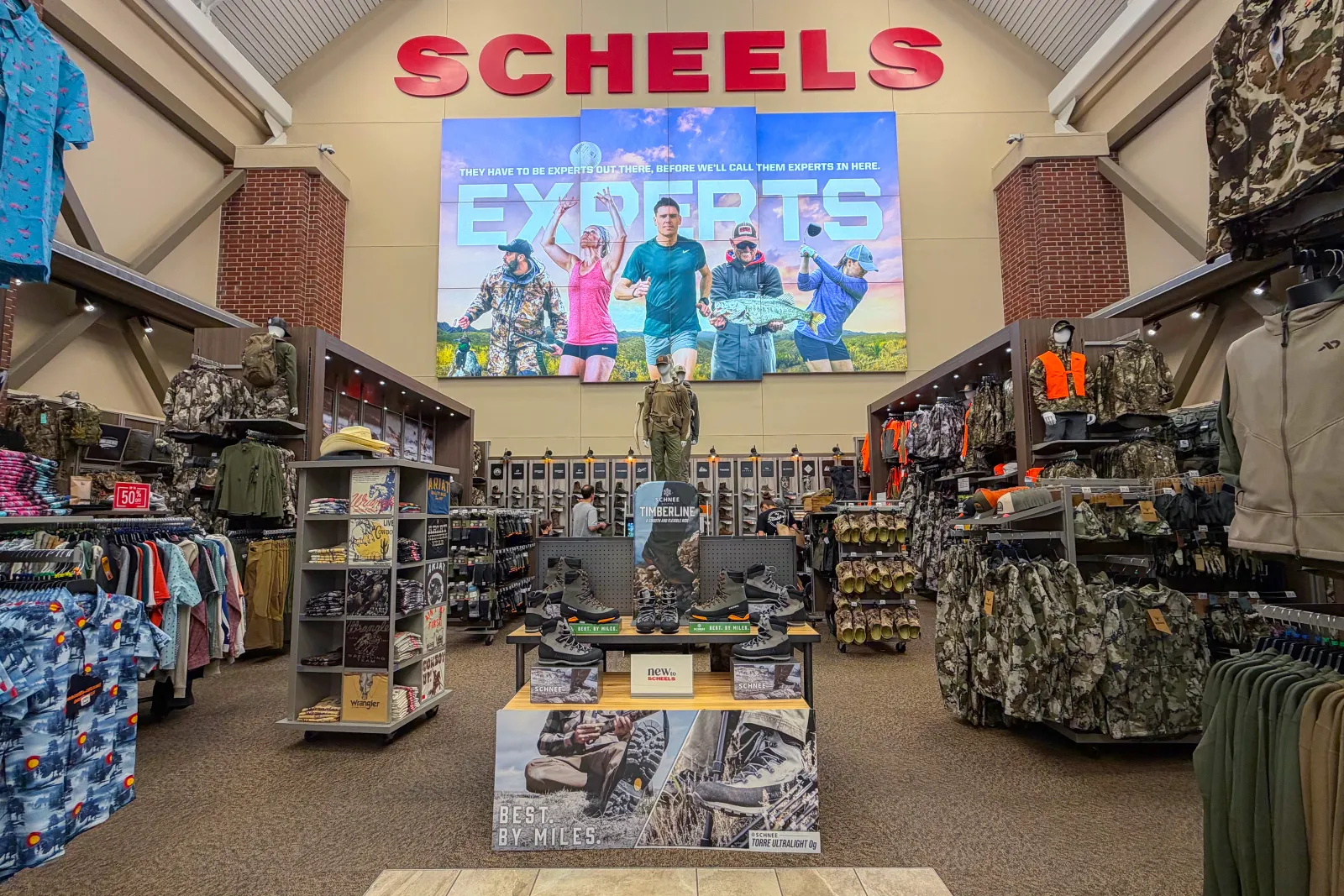
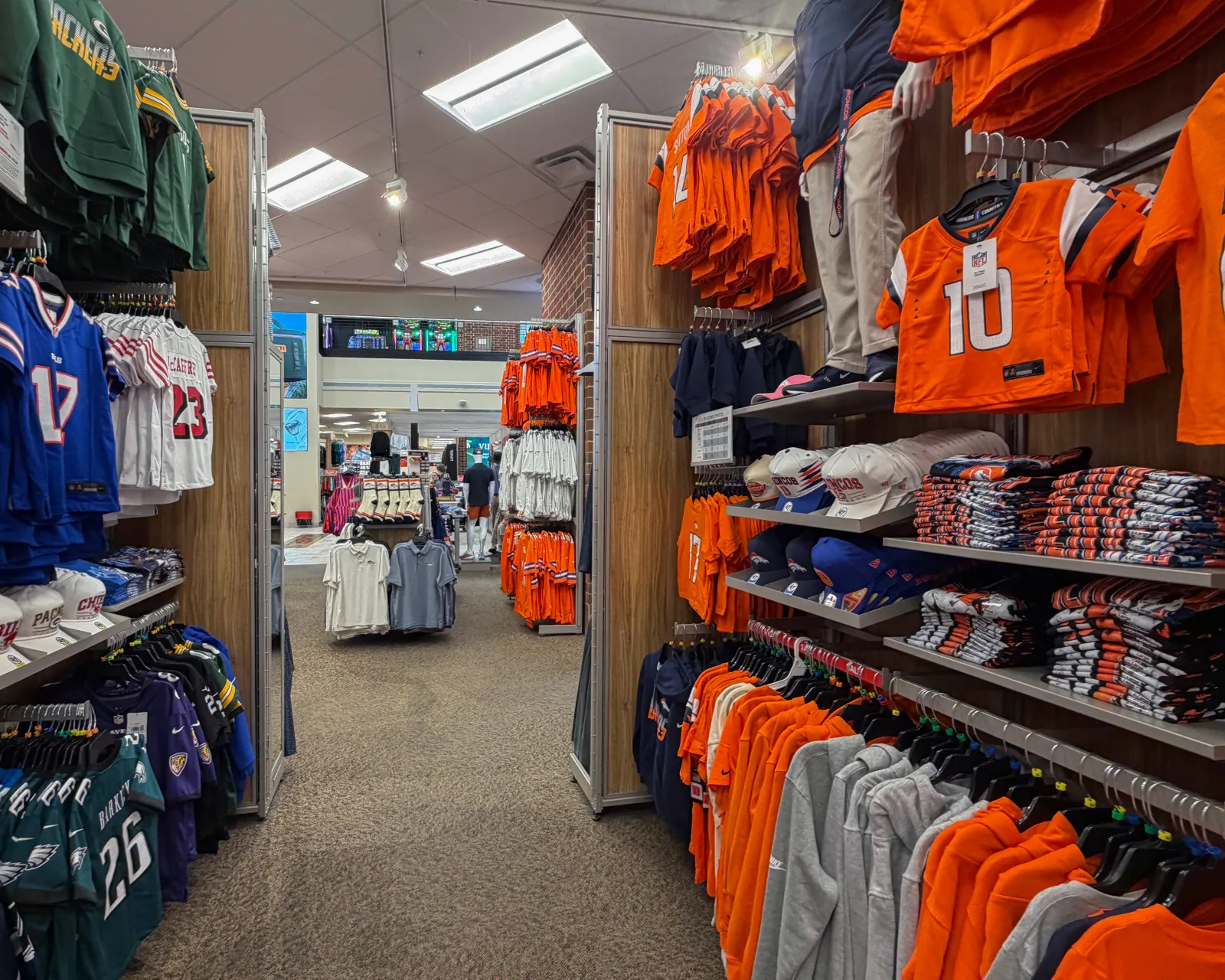
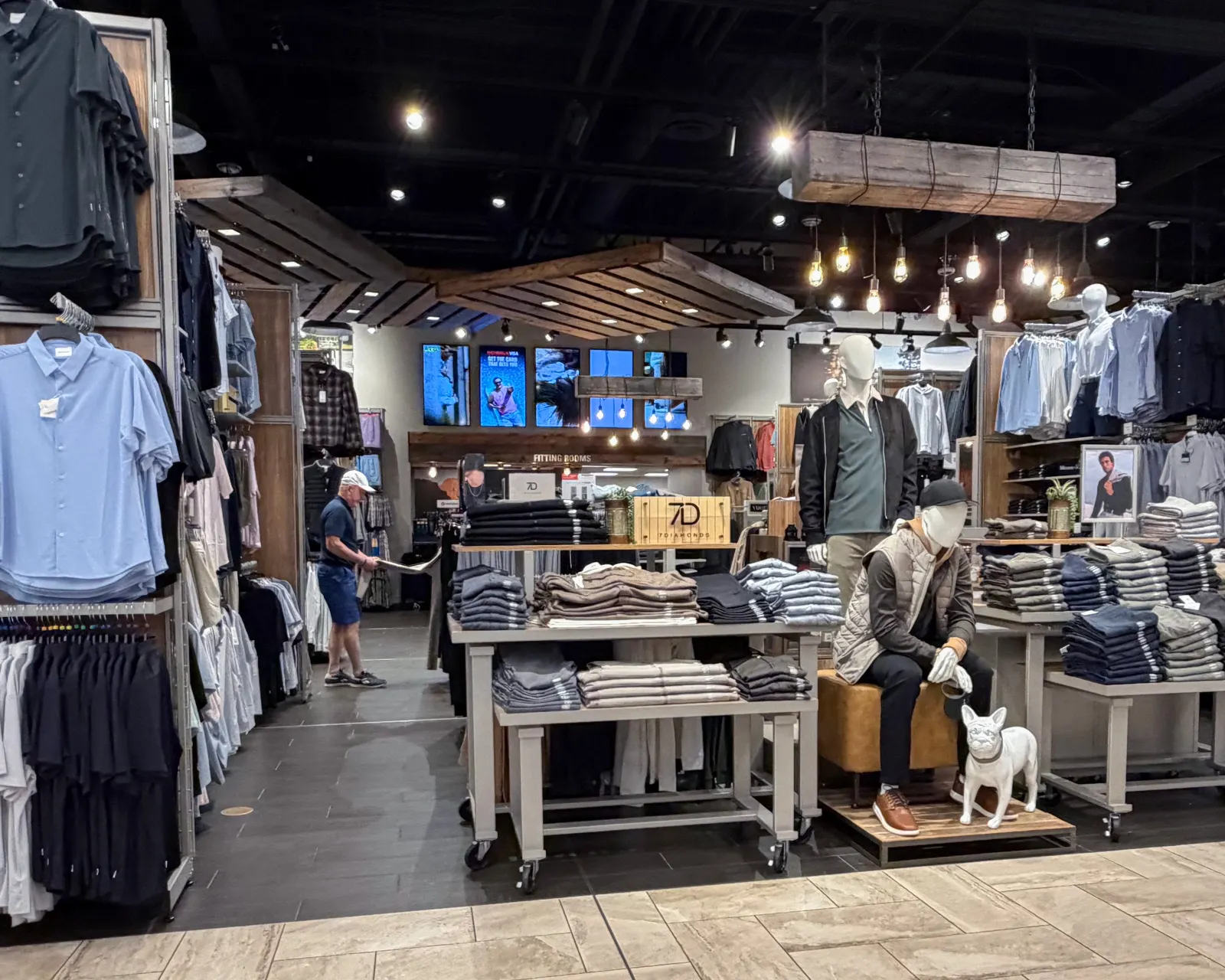
And for good reason. Each section of the store I visited in Colorado Springs, Colorado, was impeccably merchandised. Clothing racks and display cases were neat, employees circled the floor constantly and practically everywhere I turned had some form of interactive experience.
It helps that the store is 220,000 square feet — by comparison, the average Dick’s Sporting Goods store is 50,000 square feet and even its experiential House of Sport format taps out at almost half the size of the Scheels store I visited. That leaves room for a joint approach to retailing that pairs merchandising with services.
For example, Scheels doesn’t just have a hunting department. It has a hunting apparel and footwear selection, aisles of bows and arrows to shop, related props and accessories, and certified bow technicians to adjust draw length, draw weight and other specifications for archery enthusiasts. The department also includes archery lanes where shoppers can test out bows before buying them.
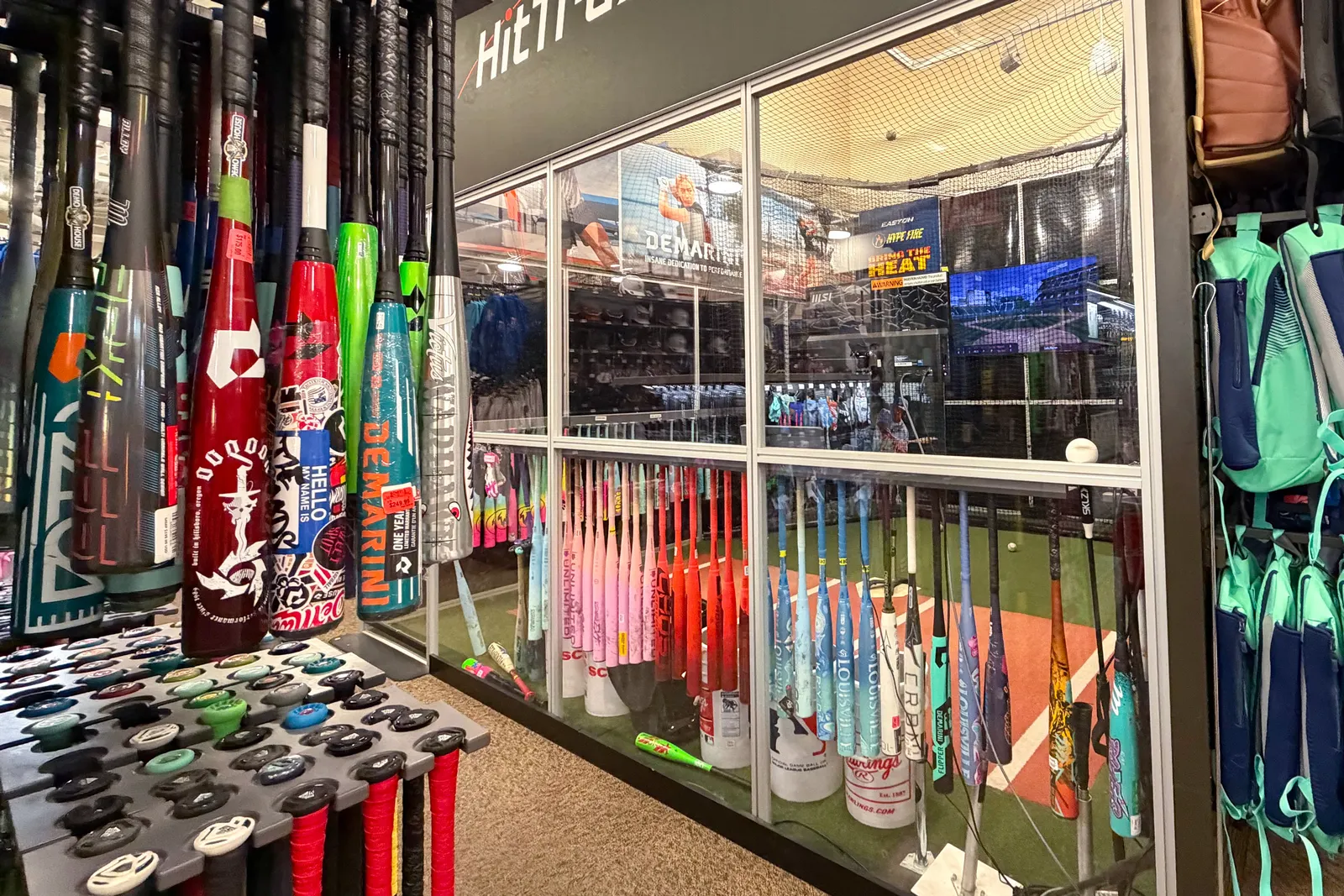
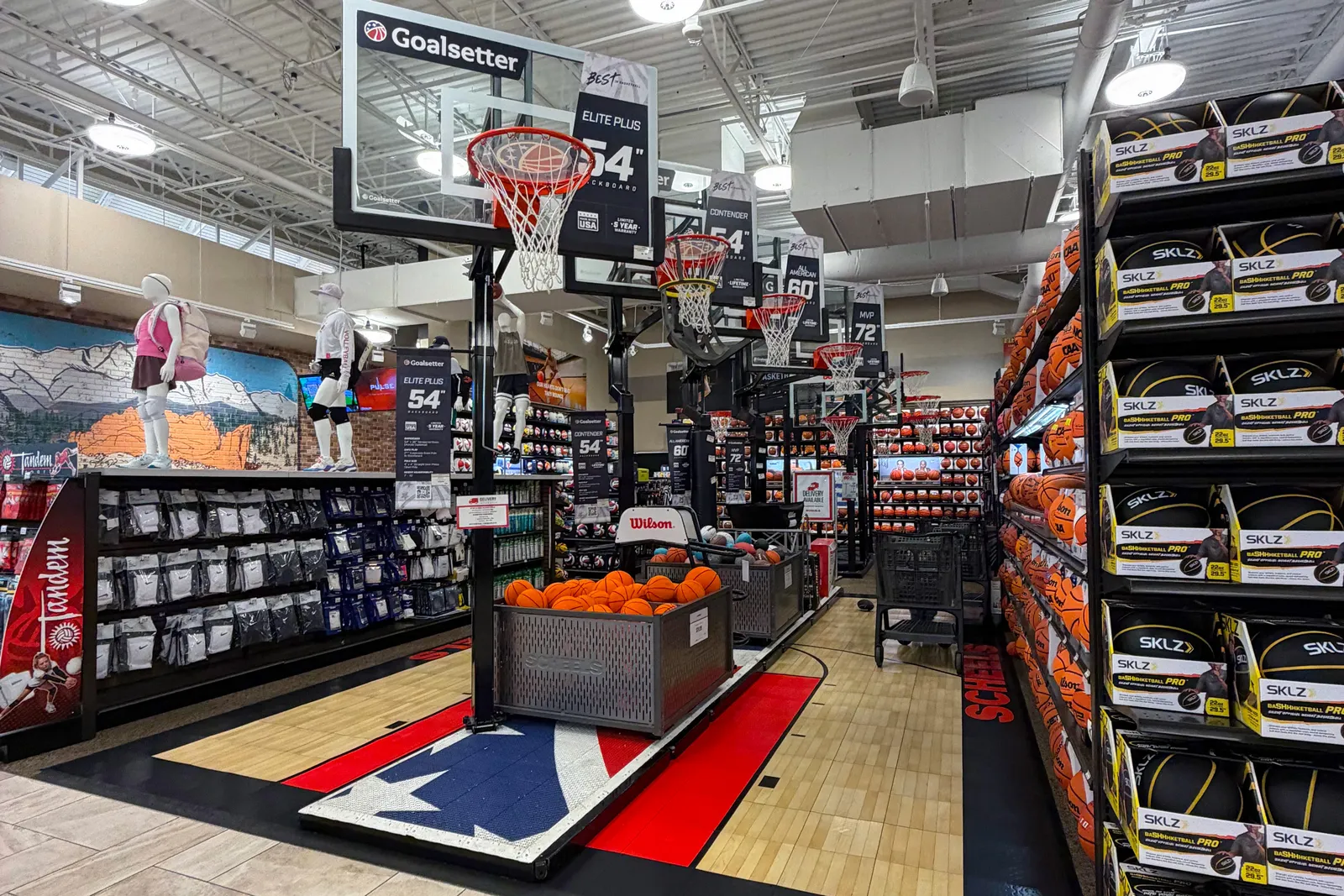
It’s a theme throughout Scheels. The company had a mock hardwood floor set up in the basketball department with multiple hoops, a batting simulator in its baseball and softball department, and advertises skate sharpening, glove steaming, ski and snowboard repairs, and bike tune-ups, among other things.
“When they do something, they go all in on it,” Powell said. “When they decide to add a brand … it's not a couple of racks. It's a wall. It's a section. The Vuori section is bigger than anybody else's Vuori section outside of a Vuori store.”
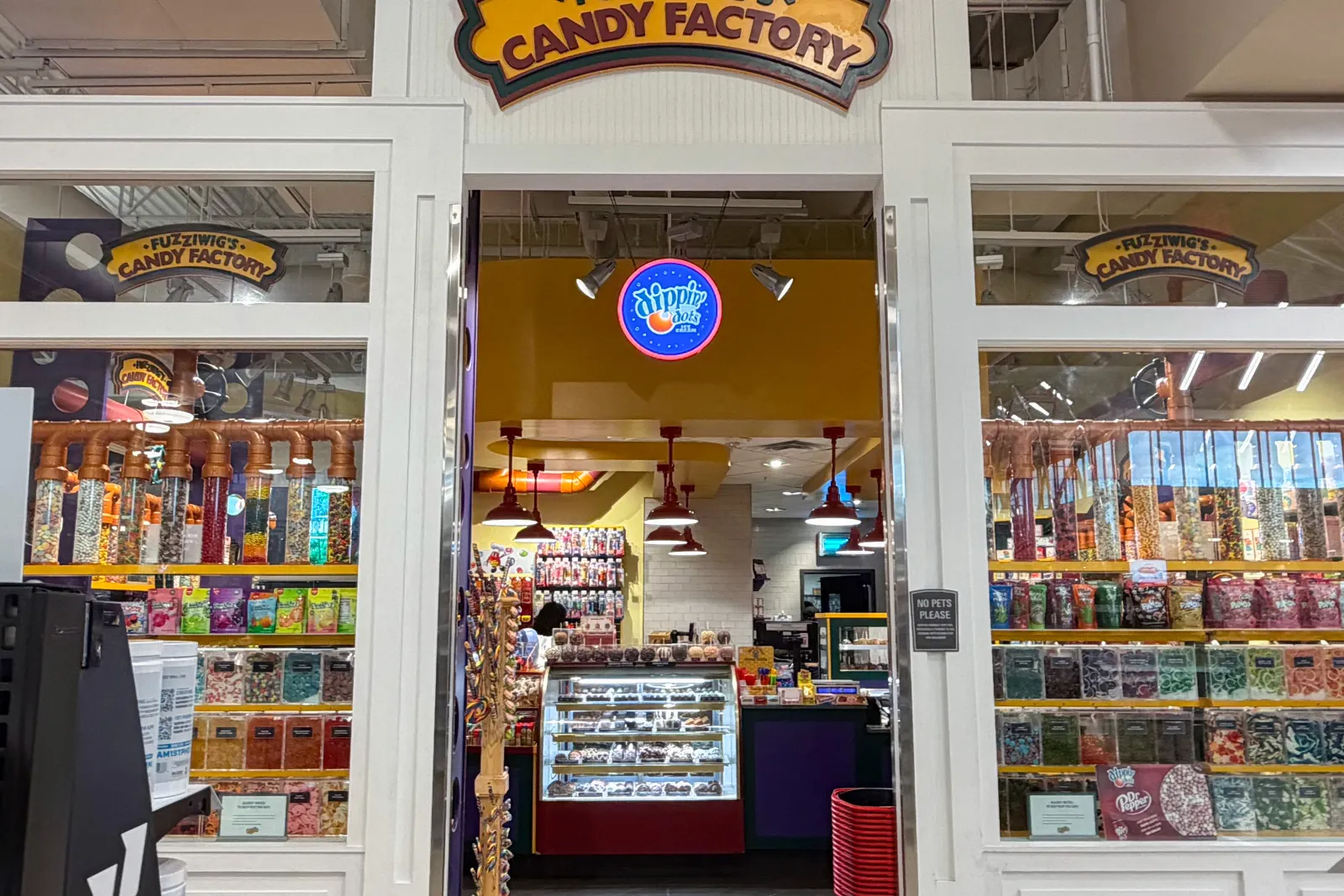
That level of investment extends beyond the core categories a sporting goods retailer would be expected to offer. Scheels’ “toyland” department is a fully branded shop-in-shop experience with an extensive assortment of Lego products, board games, plushies and figurines. It sits next door to a Fuzziwig’s Candy Factory shop-in-shop where shoppers can assemble their own candy bags.
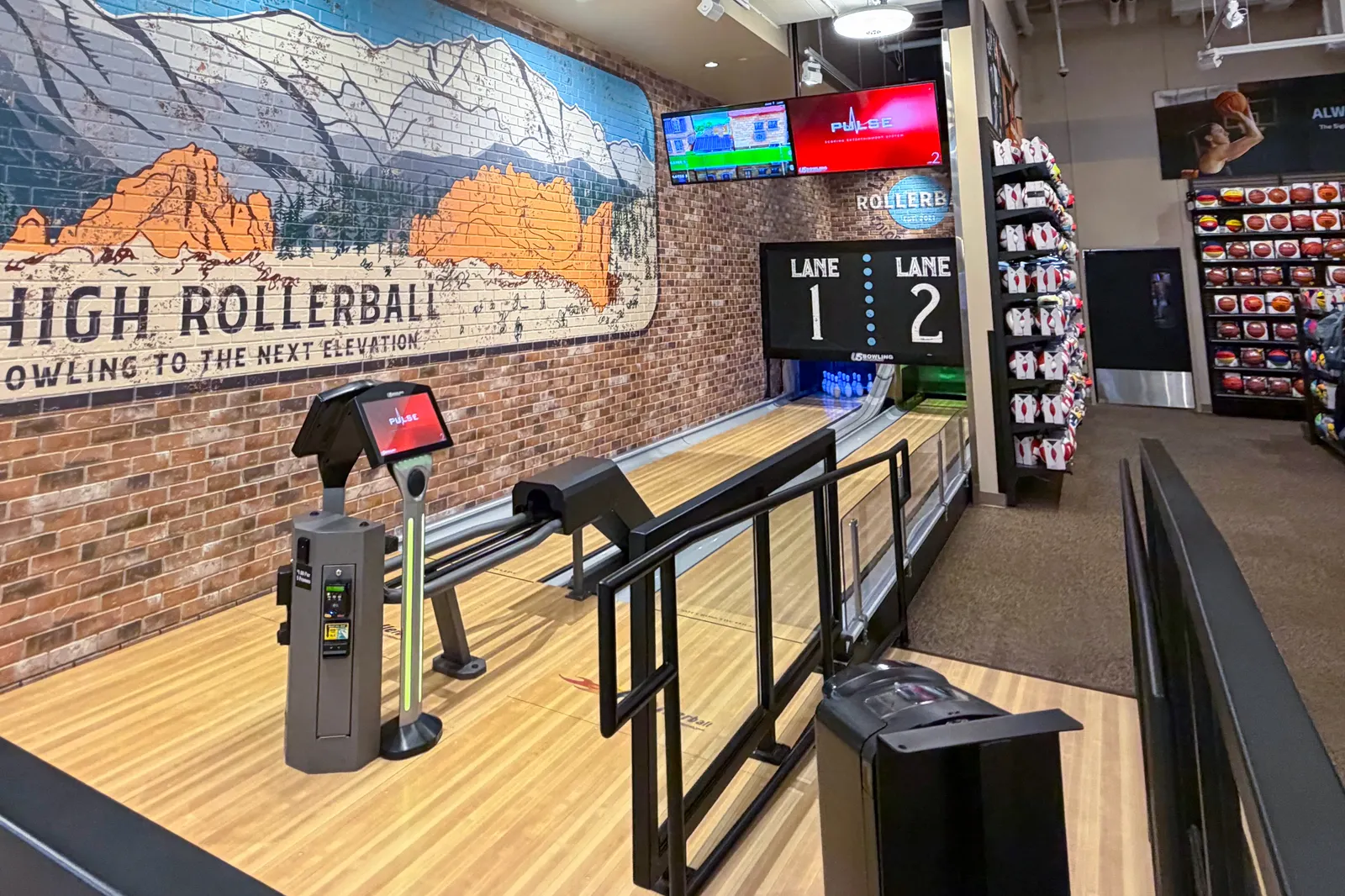
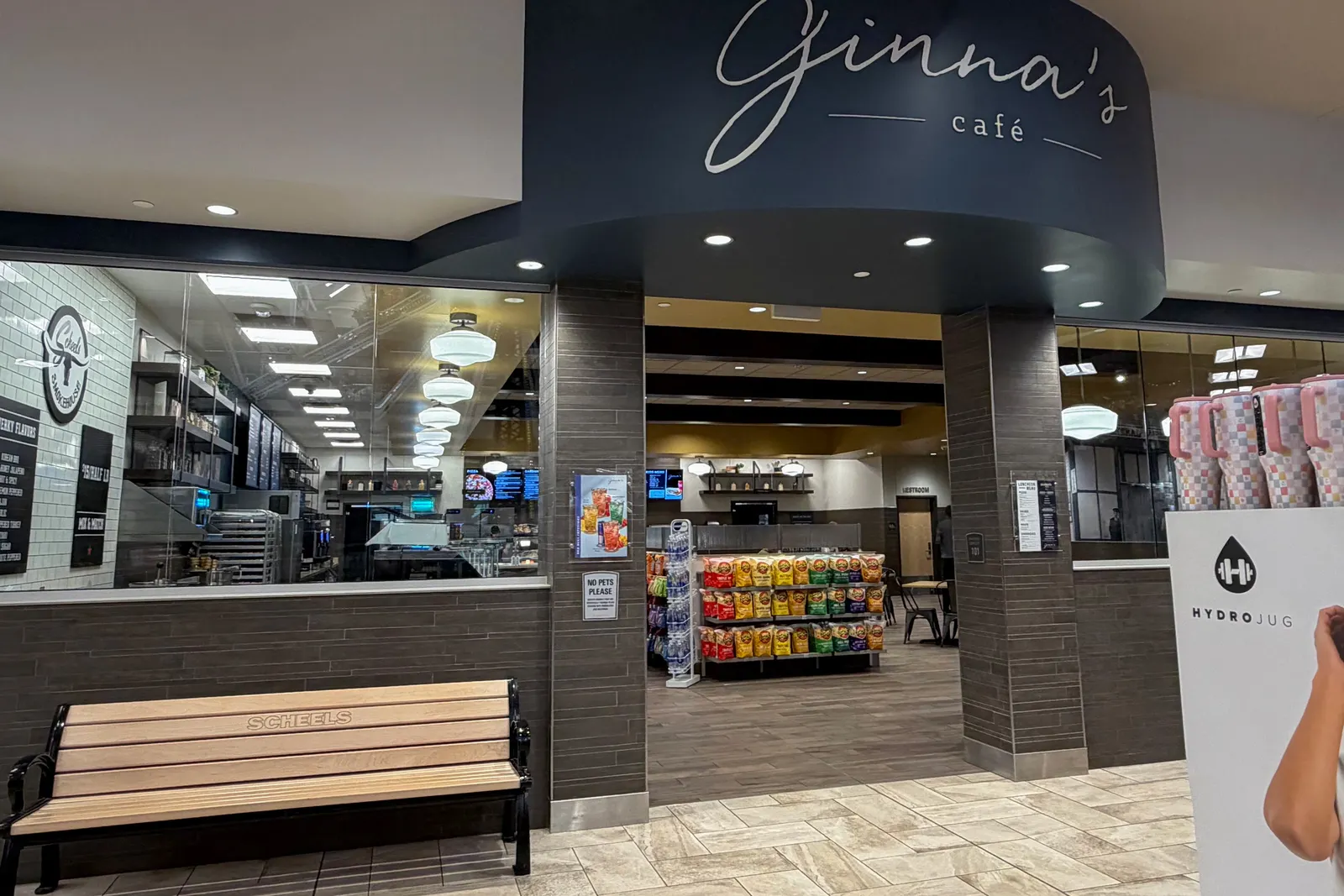
This two-level complex also features a cafe serving lunch and coffee, two bowling lanes and an arcade with a few choice games.
“I think they really discovered the power of entertainment,” Powell said, noting that many Scheels stores are in more remote locations. “Customers often travel hours to shop there and spend the day shopping. It's not like ‘Hey, I'm going to run out to this hardware store and get a screwdriver and I'll be home in 20 minutes.’”
In many ways, it’s reminiscent of the department store shopping experience of yore, which encouraged customers to come and stay for the day. These retail institutions once featured tea rooms, restaurants and various services in addition to a host of different merchandise categories.
We’re a far cry from that now, but Scheels’ model very well may be “the department store for the active family,” as Powell called it.
“I don't think that anybody planned a toy department or a candy shop in the original thought brief of what this company was going to be. But they tried it, it worked and they did more of it,” Powell said. “I wish every retailer in the world knew their customer as well as Scheels does.”
During a period of online overload, it’s also a distinctly physical shopping experience. You can purchase things from Scheels online, but the in-store experience seems built to engage your senses and bring you back to the real world.
That may be more important than ever in today’s AI-powered age. Commercial real estate firm JLL found in a recent report that shoppers are now looking to physical retail as a place for tactile discovery, human connection and sensory relief from screens. That said, nearly three-quarters of consumers JLL surveyed have left a store early because they found it overwhelming or overstimulating.
That doesn’t rule out a model like Scheels — which seems to thrive on stimulation — it just comes down to what type of experience a shopper wants to have, Emily Albright Miller, executive vice president of retail store design at JLL, told Retail Dive.
“It's really about the trip mission, and there are so many different trip missions,” Miller said. Convenience is a very different trip mission than what would bring someone to a Scheels store, for example. “If consumer expectations are set accordingly, it can be a very, very positive experience. It's when you have other trip missions that are equally as dominant, and consumer expectations might not be preparing the consumer for the overstimulating environment, that's when we see a disconnect.”
Retail 101
At its core, Scheels’ strength might lie in a host of well-executed retail fundamentals.
Neat merchandising displays might seem like table stakes these days, but my trip to Scheels revealed just how used to cluttered and disorganized spaces I’d become. With shoppers constantly disrupting shelves, we’ve all come to expect a certain level of rumpled shirts and askew hangers, but the Scheels team seemed to be firmly on top of correcting these errors.
Powell attributes this level of professionalism, in part, to the company’s employee-owned status. On one trip to a Scheels store, Powell was told a sales clerk would be retiring as a millionaire from working at the store. That means that, rather than staffing locations purely with teenagers, Scheels is able to attract professionals who care deeply about running the store well.
The retailer advertises long-term careers and growth opportunities on its website, as well as “competitive benefits.” As of Monday, the Scheels in Colorado Springs was hiring for a variety of part-time positions with starting salaries ranging from $16 to $22 per hour. One full-time role for a bike accessories specialty shop manager advertised yearly pay of between $46,000 and $48,000.
Scheels is also methodical about growing its store fleet. While Dick’s Sporting Goods introduced its House of Sport concept in 2021 and already has 35 locations, Scheels has been expanding at a much slower pace. The retailer has 34 Scheels stores and one Scheels Home & Hardware location listed on its website, and will open four stores between 2027 and 2029.
“If you're a hot retailer, you're rolling them out as fast as you can — and these guys are extremely studied in what they do, where they go,” Powell said. “To some extent that's a governor on how much they can grow. If you're only opening one store a year, you're not approaching a billion dollars overnight.”
But perhaps the biggest retail fundamental Scheels embraces is the joy of shopping.
Put simply, Scheels is committed to fun. Sure, sometimes that’s in the service of the products it sells, like its archery lanes or basketball hoops. Other times, though, it’s fun for the sake of fun.
It’s an aquarium and a ferris wheel when you first walk in. It’s an animatronic Abe Lincoln reading out the Emancipation Proclamation on the second floor. It’s the Thomas Jefferson statue that greets you at the entrance.
“Our job as retailers is to surprise and delight, and I think Scheels embodies the concept of surprise and delight,” Powell said. “Maybe it doesn't work. Maybe nobody looks at Thomas Jefferson's statue, I don't know. But I will tell you if it doesn't work, it won't be there the next time you go.”